

Browse · People
Thibault Sottiaux
OpenAI’s Codex leader on practical coding agents, the shift toward broader computer work, and keeping users’ understanding intact.
Thibault Sottiaux, known as Tibo, leads work on AI agents that help people understand codebases and complete engineering tasks. In May 2026, he was a Member of Technical Staff leading Codex at OpenAI; OpenAI also lists him as Head of Core Products & Platform. His public explanations of Codex emphasize the practical constraints behind agent design: working in users’ existing environments, defining successful completion, and making delegation trustworthy.[2][5][4]
Making coding agents useful
Sottiaux described the modern Codex team’s initial cloud workflow as a self-contained exchange: a user supplied a task, the agent examined a repository, made changes, and opened a GitHub pull request. In his May 2026 discussion, he explained why the team changed its approach toward developers’ local environments. Reproducing an existing development setup in the cloud created too much friction, the models were not reliably completing long tasks, and users found it difficult to iterate with them.[4]
Latent.Space
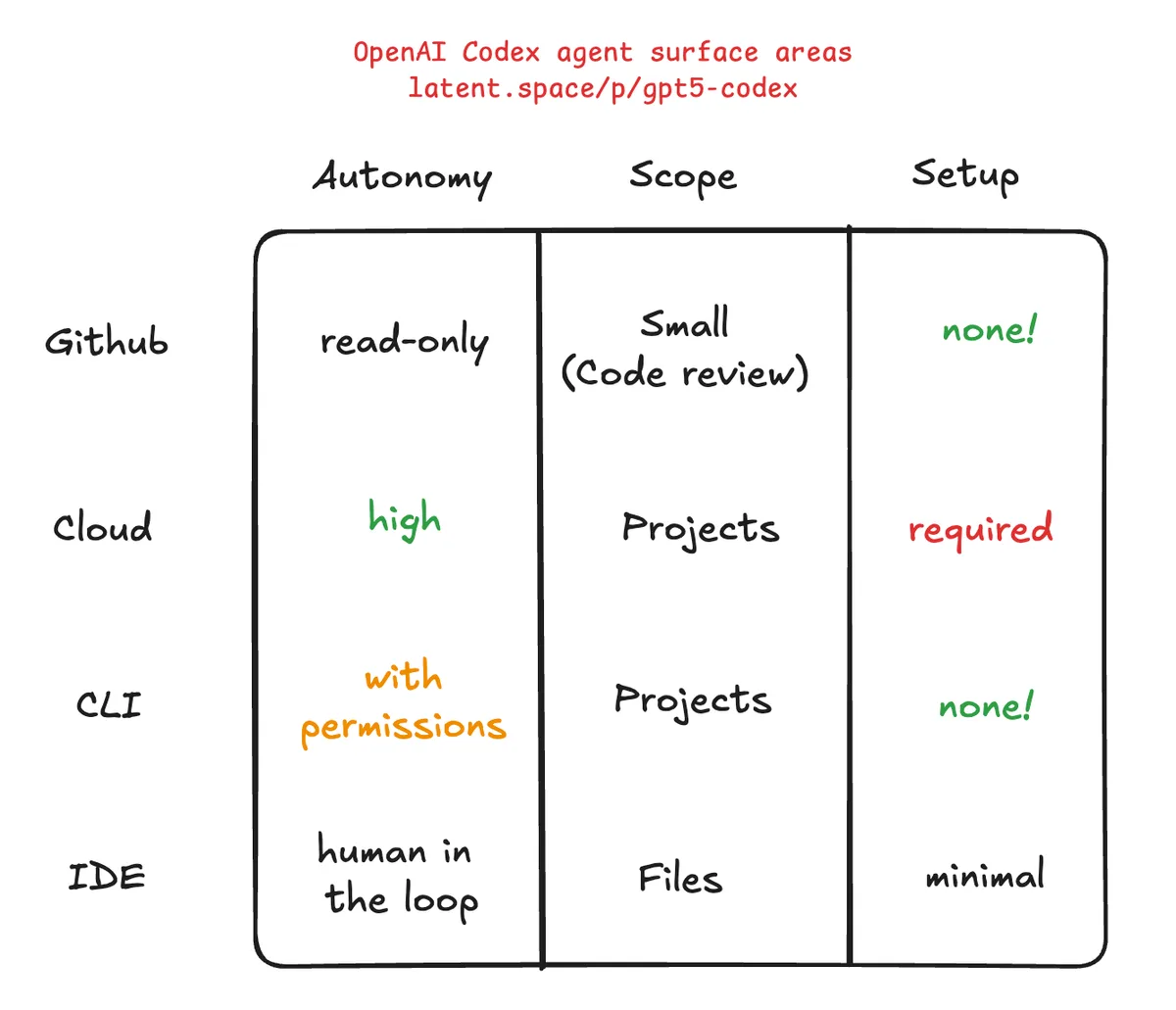
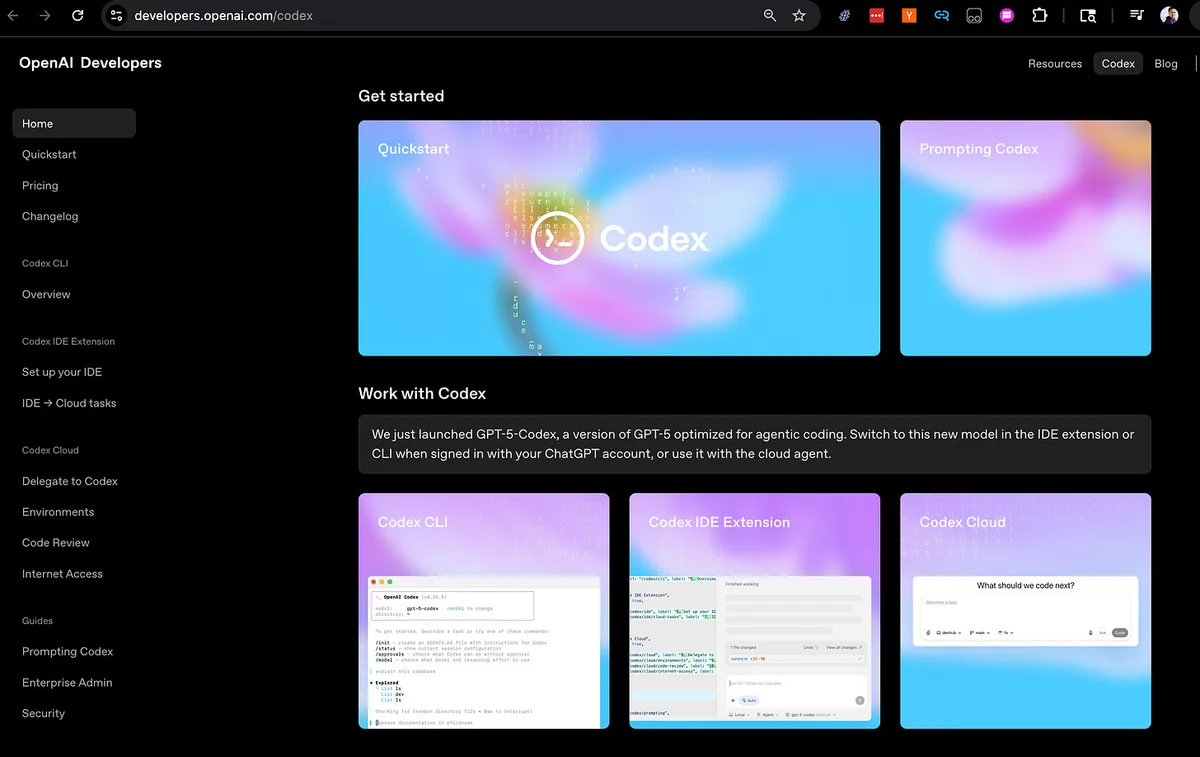
For GPT-5-Codex, Sottiaux emphasized persistence matched to task difficulty. In OpenAI podcast remarks quoted by Latent Space in September 2025, he described a model that could stay with complex refactoring while responding quickly to simple questions. He reported: “We've seen it work internally up to seven hours for very complex refactorings.” That was an internal observation about demanding tasks, rather than a typical completion time.[1]
OpenAI Developers, reproduced in Latent Space.
Recognizing work beyond code
Sottiaux recalled a concrete moment when Codex’s broader potential became clear to him: lead product manager Alexander Embiricos used agents to coordinate a launch. They gathered developer updates and user feedback, chased information through Slack, and kept a launch plan current while Embiricos was talking with Sottiaux. “I felt like, wow, you know, we're really changing everything here, not just software engineering,” Sottiaux said. He explained that giving agents access to documents and other context, initially to improve engineering work, had also made them useful for coordination and information gathering.[4]
He demonstrated that broader use with personal software: asking Codex to collect information about San Francisco bread loaves and prices into a spreadsheet, then turn the results into an interactive map. He described using voice to express what he wanted while the agent worked in the background. For his own management work, he said he used Codex as a “little chief of staff,” summarizing information from Gmail, Notion, and Calendar and flagging risks in his day or upcoming launches.[4]
Delegation, trust, and understanding
Sottiaux advises users to specify what successful completion looks like, so an agent can assess its progress and recognize when it is done. His example was a ten-slide presentation with defined sections and purposes. He also compares an agent to a new colleague who lacks context: users need to explain their preferences, identify relevant documents, and share information that exists only in their heads. He said he had adopted the habit of writing his own thoughts and goals into files that Codex could access.[4]
In his view, the principal barrier to enterprise adoption in May 2026 was trust, especially safety and security. He described controls that restrict an agent’s filesystem access, disable network access, or allow reading without modifying data. He also explained a separate reviewing agent that could stop risky actions by the primary agent. These mechanisms mattered to his argument because an agent capable of acting inside a company could also delete sensitive files or disclose information.[4]
Sottiaux warns against delegating understanding along with execution: users can become less grounded if they stop learning what is happening. His advice is to use agents to explain problems as well as solve them—“too much delegation and not enough using it to just help you understand stuff” was the mistake he highlighted. Alongside that warning, he forecast continuously running agents that perform useful work and receive steering along the way, extending beyond today’s task-by-task interaction.[4]
Earlier work at Google and DeepMind
Before OpenAI, Sottiaux worked on the data and infrastructure supporting AI research. At Google DeepMind, he led human data work for Gemini and built AI/ML workflow infrastructure for DeepMind research. Earlier roles included software engineering at Google and applied research in decision-making, predictive modeling, and database systems. He holds degrees in computer science, computational mathematics, and applied mathematics from Université catholique de Louvain.[2]
Timeline
- project
Explains GPT-5-Codex’s persistence on complex tasks
In OpenAI podcast remarks quoted by Latent Space in September 2025, he described a model that could stay with complex refactoring while responding quickly to simple questions.[1] - project
Explains Codex’s shift toward local development environments
In his May 2026 discussion, he explained why the team changed its approach toward developers’ local environments.[4]
Sources
- 1How GPT5 + Codex took over Agentic Coding — ft. Greg Brockman, OpenAIAccessed 2026-09-20
- 2Codex is for Everyone: Why Codex Matters Beyond CodeAccessed 2026-09-20
- 3AMA with the Codex TeamAccessed 2026-09-20
- 4Event Replay: Codex is for Everyone: Why Codex Matters Beyond CodeAccessed 2026-09-20
- 5Defense FactoryAccessed 2026-09-20
Model source and teaching reviews passed. Human editorial review pending. This profile describes the sources as of 2026-09-20.