

Browse · People
Roie Schwaber-Cohen
Pinecone developer advocate whose technical writing examines how AI systems retrieve applicable knowledge, generate useful queries, and choose actions under explicit constraints.
Roie Schwaber-Cohen is a developer advocate at Pinecone whose work includes retrieval-augmented generation (RAG), vector-and-graph exploration, and the interpretability of model-selected actions. In his 2026 series Beyond Retrieval, he argues that grounding an answer in correct sources is insufficient: the system must first determine whether those sources govern the user's particular situation.[2][7][1][3]
Making applicability explicit
In True, Relevant, and Wrong, published February 12, 2026, Schwaber-Cohen distinguishes topical relevance from applicability. His hypothetical toaster-warranty example shows a chatbot combining a standard 24-month warranty, a utility program's 12-month coverage, regional fulfillment rules, and a newer troubleshooting requirement. Each passage can be correct individually, yet their combination describes no valid customer workflow. He calls this a “franken-answer”: the failure lies in selecting and combining incompatible policy branches.[4]
His proposed remedy moves scope into candidate selection rather than merely adding context to a prompt. A compatibility envelope specifies the conditions under which evidence applies, such as region, plan, product version, or effective date. He also proposes testing near-identical questions whose answers change with those conditions, questions missing essential qualifiers, and document sets containing individually correct but incompatible guidance. In his framing, evaluation must establish whether the system selected the right scope before generating an answer.[4]
In Knowledge needs a meta-knowledge layer, published March 9, 2026, he proposes an agent-readable knowledge-base manifest. It declares a knowledge base's purpose, required inputs, query rules, authoritative sources, and boundaries—an interface defining both how retrieval works and when it is valid. His proposed runtime first routes and checks scope, collects missing inputs, constructs a query, retrieves evidence, and checks its consistency before answering. These boundaries can use namespaces or filtered views; they do not require physically separate vector stores. He acknowledges that manifests require maintenance, can drift, and cannot replace good retrieval or source management.[5]
Earlier AI work: model control and retrieval, 2023–2024
Before the 2026 applicability series, Schwaber-Cohen addressed model control in a Latent Space discussion published June 14, 2023, which identified him as a participant from Pinecone. He welcomed more reliable exchange between models and application code, while questioning opaque action selection: “I don't know if I would trust it in all circumstances”. His concern was interpretability—understanding how an agent arrived at an action. He also said swyx's distinction between two code-and-LLM architectures resonated with him; the architectural framing was swyx's.[1]
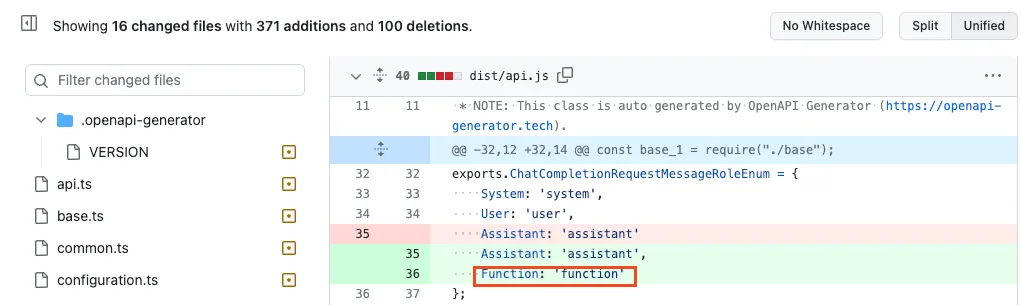
Latent Space, “Emergency Pod: OpenAI's new Functions API” (June 14, 2023).
His March 21, 2024 tutorial Advanced RAG Techniques translated ideas from SELF-RAG, Corrective RAG, and RAG-Fusion into a combined educational implementation. It used Canopy for embedding and querying, expanded the user's query, applied LLM critique, invoked external search when critique scores were low, and reranked retrieved documents with Cohere. He drew on the published methods rather than implementing any one exactly, and cautioned that there was “no silver bullet proposed here.”[6]
The tutorial also exposed a limitation of model-based evaluation. For one question about creating a Pinecone index, the LLM comparison assigned the advanced answer 0.9 and the naive answer 0.1. Schwaber-Cohen nevertheless observed that the advanced instructions “seemed to have missed the mark”. The scores represented a model's preference in a single example, alongside a substantive reservation about the usefulness of the result.[6]
In his September 6, 2024 contribution Vectors and graphs: Better together, Schwaber-Cohen described a Supreme Court case demonstration that limited reliance on LLMs during graph construction. The described system ingested Oyez data into MongoDB, derived entities and relationships from case metadata, enriched opinion text with Flair named-entity recognition, stored the graph in Neo4j, and stored chunk embeddings in Pinecone. Matching document IDs connected semantic-search results to graph nodes, narrowing the graph context supplied to an LLM for query generation. His account presents this as collaborative work, with structured metadata constraining the graph rather than leaving its ontology entirely to a model.[7]
Historical foundation: authorization writing in 2022
Earlier still, Schwaber-Cohen's January 20, 2022 Aserto tutorial From RBAC to ABAC demonstrated runtime decisions based on changing user attributes. In an imaginary company's two projects, Rego policies combined project assignment, approved devices, location, and timezone-dependent working hours; an application used the Aserto Directory API to simulate attribute changes. This earlier writing supplies concrete context for his work explaining conditional systems. He also warned that attribute-based access control could increase complexity and make authorization models harder to maintain.[8]
Timeline
- milestone
Questions opaque model action selection on Latent Space
Before the 2026 applicability series, Schwaber-Cohen addressed model control in a Latent Space discussion published June 14, 2023, which identified him as a participant from Pinecone.[1] - project
Combines advanced retrieval methods in an educational implementation
His March 21, 2024 tutorial Advanced RAG Techniques translated ideas from SELF-RAG, Corrective RAG, and RAG-Fusion into a combined educational implementation.[6] - project
Explains a vector-and-graph demonstration grounded in case metadata
In his September 6, 2024 contribution Vectors and graphs: Better together, Schwaber-Cohen described a Supreme Court case demonstration that limited reliance on LLMs during graph construction.[7] - milestone
Distinguishes relevant evidence from applicable evidence in RAG
In True, Relevant, and Wrong, published February 12, 2026, Schwaber-Cohen distinguishes topical relevance from applicability.[4] - milestone
Proposes manifests that declare retrieval scope and boundaries
In Knowledge needs a meta-knowledge layer, published March 9, 2026, he proposes an agent-readable knowledge-base manifest.[5]
From the Latent Space archive
Original posts and separately reviewed explanations.
Sources
- 1
- 2Roie Schwaber-Cohen | PineconeAccessed 2026-09-20
- 3Beyond Retrieval | PineconeAccessed 2026-09-20
- 4True, Relevant, and Wrong: The Applicability Problem in RAGAccessed 2026-09-20
- 5Knowledge needs a meta-knowledge layerAccessed 2026-09-20
- 6Advanced RAG Techniques | PineconeAccessed 2026-09-20
- 7Vectors and graphs: Better togetherAccessed 2026-09-20
- 8From RBAC to ABACAccessed 2026-09-20
Model source and teaching reviews passed. Human editorial review pending. This profile describes the sources as of 2026-09-20.