

Browse · People
Pauline Brunet
As of July 2026, Cursor’s VP of Forward Deployed Engineering, building an enterprise AI deployment team around production experience, organizational adoption, and long-running agents.
In July 2026, Pauline Brunet was Cursor’s VP of Forward Deployed Engineering, building a team to help customers use agents across the software development lifecycle. She announced her move to Cursor in May 2026. Her remit extended from planning and designing software through testing, deployment, and maintenance.[2][4]
Deploying agents inside organizations
Brunet defines forward deployed engineering around the customer’s business, the product’s configurability, and the systems in which it must operate. In her July 2026 interview, she described engineers going on-site, working inside customers’ systems and tools, and deploying applications customized to their workflows and processes. This makes understanding the customer’s operating environment part of the engineering work.[2]
Her software factory vision connects work that is often divided among design, development, and product teams. Starting with a requested feature, long-running agents could help produce a plan and product requirements document, demonstrate the proposed feature, write and test code, deploy it, and maintain it. Issues and product feedback would feed back into the same lifecycle. At the AI Engineer World’s Fair, she described the customer partnership as work to “co-design and co-build your AI software factory.”[2][1]
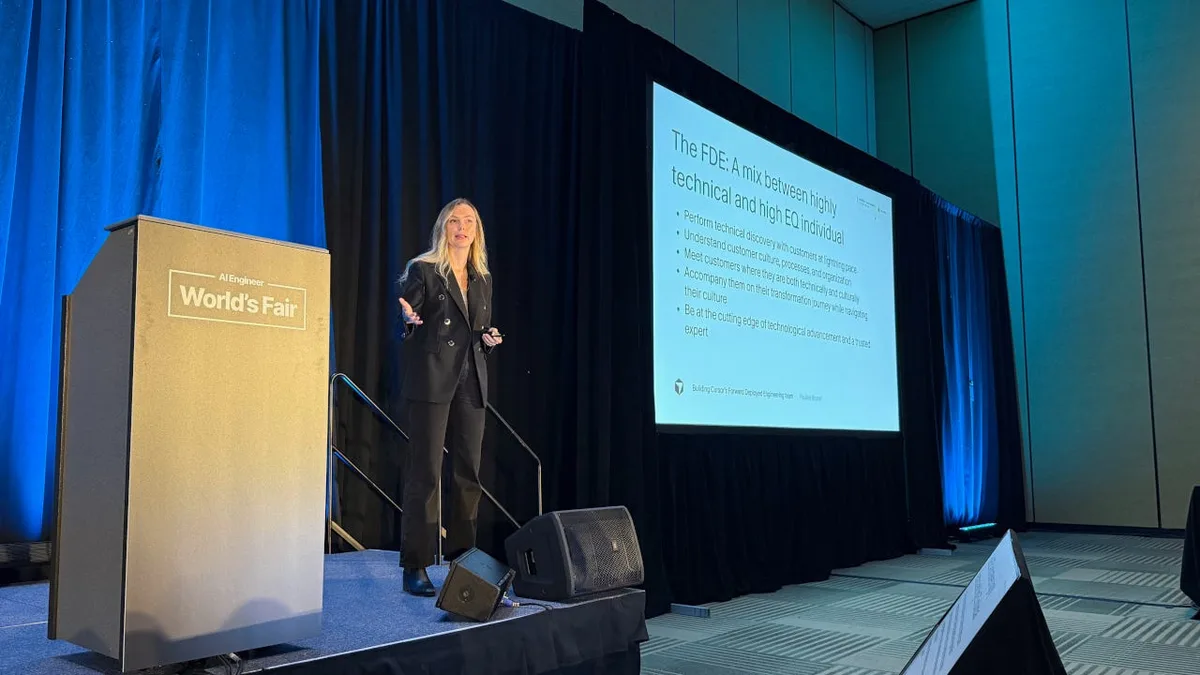
Latent.Space; photographer not identified in the supplied source.
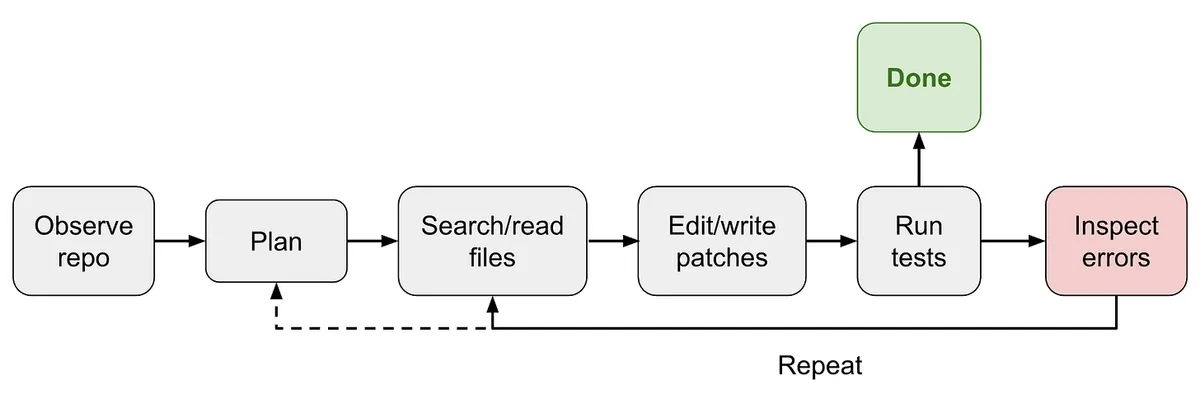
Lilian Weng, credited in Latent.Space’s “5 Trends That Defined AI Engineering at World’s Fair 2026.”
Brunet argues that broader adoption requires leadership support and internal champions who can work with the FDE team to change shared processes. Individual enthusiasts may already be productive with local or cloud agents, but coordinated use across teams requires organizational decisions about what to automate. She offered a QA agent applying the same process across several development teams as one possible example of that shift.[2]
She judges engagements by whether the deployed systems remain useful after the engineers leave. Describing her team’s work with cloud agents, long-running agents, automations, and applications built on the Cursor SDK, she said the objective was sufficient return on investment that customers would keep using them: “That means they’re not gonna turn things off when we leave.” This was her stated engagement standard, rather than a quantified customer result.[3]
Building the team and shaping the product
In July 2026, Brunet said all members of Cursor’s FDE team were engineers, with hiring requiring at least five years of software engineering experience and extensive customer-facing experience. She emphasized shipping production code, designing systems, and making technology trade-offs. Team members brought experience from companies including Spotify, Rippling, and Palantir. She also stated a goal of growing the team tenfold by the end of December 2026.[2]
Brunet said the team’s close work with customers helps Cursor’s product and engineering teams understand what customers want to build, giving FDEs a significant collaborative role in shaping the roadmap. She expects the work itself to evolve quickly: “I always say that if we are doing the same job we were doing six months ago, we have done something wrong.”[2]
Her advice to prospective FDEs is to own a production project from beginning to end, including design, development, testing, and delivery to real users. Engineers should be able to explain why they chose a database or service, what trade-offs they made, and how the system creates value. She recommends understanding both business return on investment and evaluations that demonstrate value to internal customers.[2]
Earlier enterprise AI work: consulting and C3 AI
Before Cursor, Brunet worked in enterprise AI solutions and consulting. She joined C3 AI as a solutions leader in summer 2020, following consulting work for PWC Canada and Element AI. In a February 2021 C3 AI account, she said she joined “to do impactful work and explore and solve complex problems using AI and machine learning for some of the largest organizations across the globe.” That earlier customer-oriented AI role provides career context for her later deployment leadership at Cursor.[5][2]
Timeline
- role
Joined C3 AI after enterprise consulting
She joined C3 AI as a solutions leader in summer 2020, following consulting work for PWC Canada and Element AI.[5] - role
Announced move to Cursor
She announced her move to Cursor in May 2026.[4] - role
Led Cursor’s enterprise agent deployment team
In July 2026, Pauline Brunet was Cursor’s VP of Forward Deployed Engineering, building a team to help customers use agents across the software development lifecycle.[2]
Sources
- 1AIEWF Daily Dispatch: Loops, Software Factories & Forward Deployed EngineersAccessed 2026-09-20
- 2How Cursor deploys AI inside the enterpriseAccessed 2026-09-20
- 35 Trends That Defined AI Engineering at World’s Fair 2026Accessed 2026-09-20
- 4Pauline Brunet’s Post — joining CursorAccessed 2026-09-20
- 5Solutions Leaders Act as Digital Transformation GuidesAccessed 2026-09-20
Model source and teaching reviews passed. Human editorial review pending. This profile describes the sources as of 2026-09-20.