

Browse · People
Emil Eifrem
Neo4j co-founder and CEO advocating graphs, shared ontologies, and persistent context for AI systems.
Emil Eifrem is Neo4j’s co-founder and CEO. His AI work includes helping organize a developer stack with Docker, LangChain, and Ollama, and advocating shared ontologies as infrastructure for agents. He argues that agents need contextual reasoning, persistent memory, and accurate, traceable outputs—capabilities he sees graph technology as suited to provide.[2][4][1][5]
A shared semantic layer for agents
At the 2026 AI Engineer World’s Fair, Eifrem proposed a “smarter shared substrate” for running agents at scale. As Richard MacManus reported, his proposal brought together three kinds of information: business-facing concepts describing an organization, technical metadata describing its data sources and assets, and execution traces capturing agents’ runtime signals.[1]
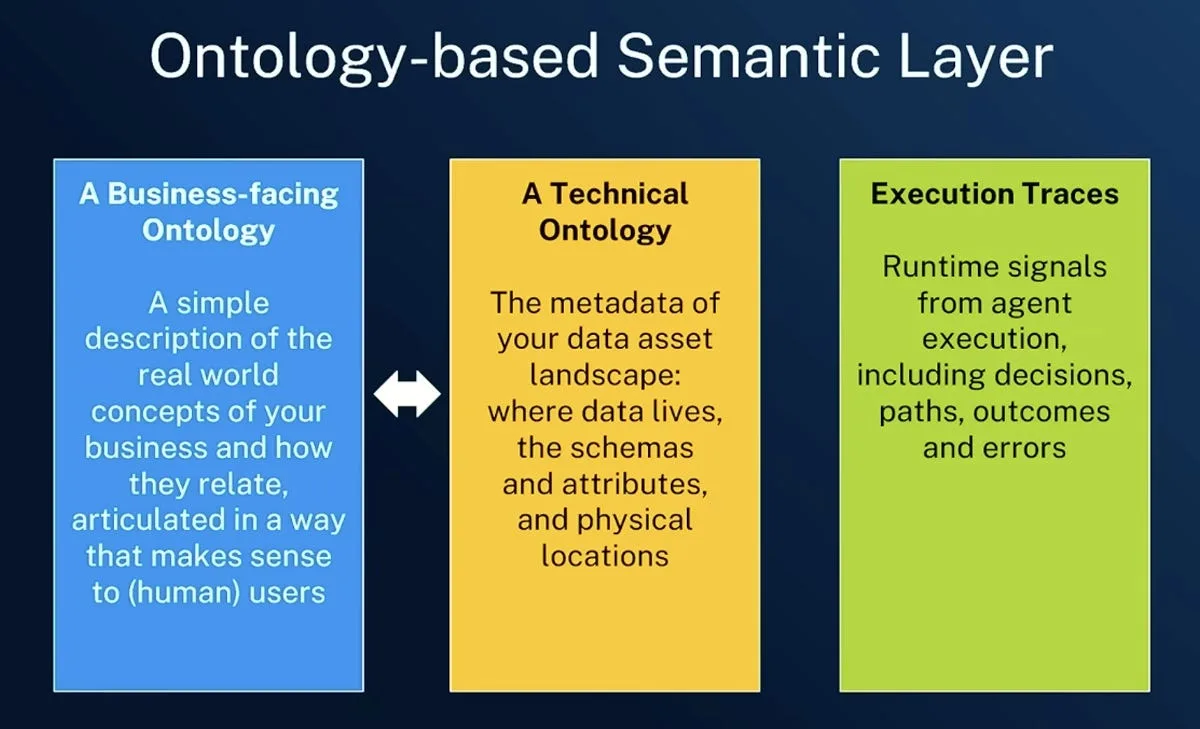
Published by Latent.Space in Richard MacManus’s “Ontologies Are So Back: Why AI Agents Are Reviving the Semantic Web.”
Eifrem framed the architectural change as moving from “a world of thick agents with manually wired data sources” to “thin agents on a smarter shared ontology-based semantic layer.” In this proposal, the shared layer supplies the semantic structure that would otherwise be wired into individual agents.[1]
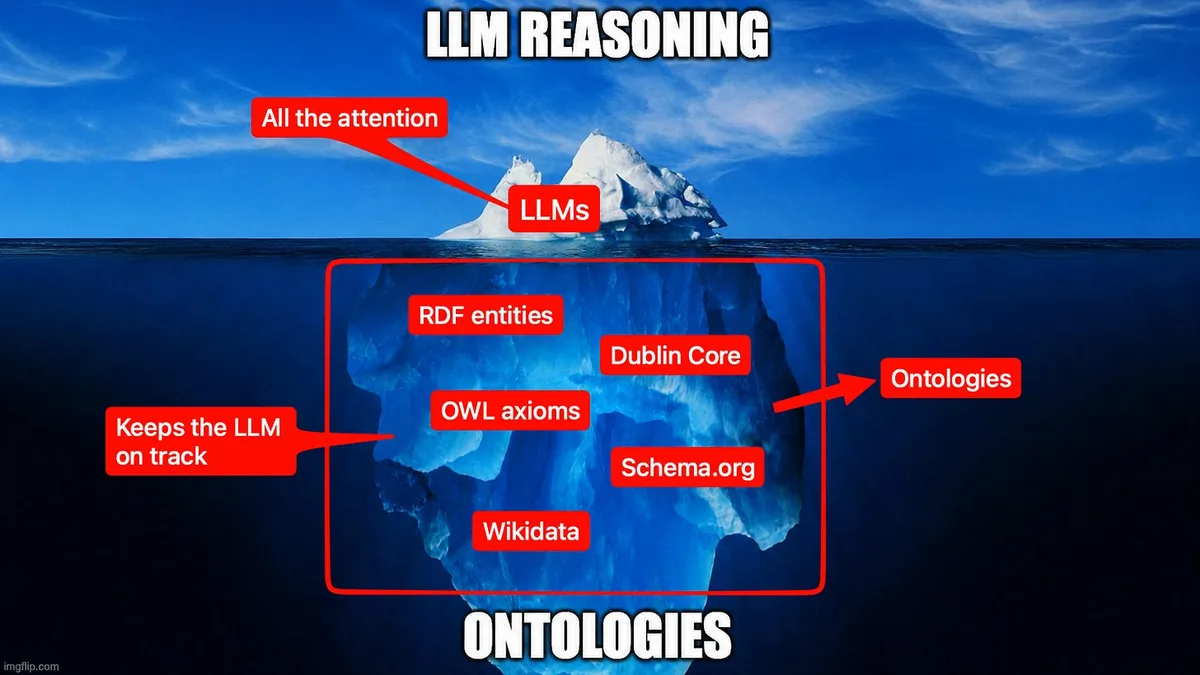
Published by Latent.Space; image creator unspecified. Visible imgflip.com watermark.
Earlier, on October 1, 2025, Neo4j announced a $100 million investment in AI product innovation, startup support, and leadership expansion. Eifrem endorsed the investment as accelerating the company’s effort to turn disconnected data into actionable knowledge. The announcement credited Sudhir Hasbe’s product leadership during its recent GenAI advances.[5]
2023: Organizing a GenAI developer stack
Before his shared-ontology proposal, Eifrem helped bring graph-based retrieval into an integrated GenAI developer stack. In his October 5, 2023 launch account, he recalled a conversation roughly a month earlier with Docker CEO Scott Johnston. Johnston proposed a prebuilt GenAI stack with integrated technologies and sample applications; the two began exploring its components.[4]
The resulting free GenAI Stack combined Docker containers, Neo4j vector search and knowledge graphs, LangChain orchestration, and Ollama for running and managing local models. Eifrem described bringing LangChain founder Harrison Chase and Ollama co-founder Jeff Morgan into the collaboration. Docker CTO Justin Cormack presented it at DockerCon 2023 alongside Chase, Morgan, and Neo4j’s Michael Hunger.[4]
Eifrem’s technical argument was to combine the implicit relationships uncovered by vectors with the explicit, factual relationships represented by graphs. The stack supported retrieval-augmented generation (RAG), which he called, in his opinion, the easiest way to integrate an LLM into an application and give it access to the application’s own data. It bundled the components in Docker containers and supported experimentation with both local models and API-hosted models.[4]
Earlier foundations: Graph databases and open source
Eifrem’s work on graph databases predates these AI collaborations. In a 2018 recollection, he wrote that he, Peter, and Johan had been building an enterprise content management system before his flight to Mumbai in 2000. Neo4j’s biography credits him with sketching what became known as the property graph model on that flight. He subsequently devoted his career to building and advocating graph databases and graph analytics, and co-authored the O’Reilly book Graph Databases.[3][2]
His employer-hosted profile describes his approach to sustainable open source as balancing free availability with commercial reliability. That balance also appeared in the 2023 GenAI collaboration: the integrated stack was released free of charge to help developers begin building LLM applications.[3][4]
Timeline
- research
Sketches the property graph model, according to Neo4j
In a 2018 recollection, he wrote that he, Peter, and Johan had been building an enterprise content management system before his flight to Mumbai in 2000. Neo4j’s biography credits him with sketching what became known as the property graph model on that flight.[3][2] - milestone
Endorses Neo4j’s $100 million AI investment
Earlier, on October 1, 2025, Neo4j announced a $100 million investment in AI product innovation, startup support, and leadership expansion. Eifrem endorsed the investment as accelerating the company’s effort to turn disconnected data into actionable knowledge.[5] - milestone
Proposes a shared semantic layer for agents
At the 2026 AI Engineer World’s Fair, Eifrem proposed a “smarter shared substrate” for running agents at scale. As Richard MacManus reported, his proposal brought together three kinds of information: business-facing concepts describing an organization, technical metadata describing its data sources and assets, and execution traces capturing agents’ runtime signals.[1]
Sources
- 1Ontologies Are So Back: Why AI Agents Are Reviving the Semantic WebAccessed 2026-09-20
- 2LeadershipAccessed 2026-09-20
- 3Emil's blogAccessed 2026-09-20
- 4Introducing a New GenAI Stack for DevelopersAccessed 2026-09-20
- 5Neo4j invests $100 million in GenAI and launches key agentic AI innovationsAccessed 2026-09-20
Model source and teaching reviews passed. Human editorial review pending. This profile describes the sources as of 2026-09-20.