

Browse · People
David Hershey
Creator of Claude Plays Pokémon, with a background in machine learning infrastructure and public views on prompting, fine-tuning, and agent reliability.
David Hershey created Claude Plays Pokémon, an agent project that made Claude’s ability to act, learn from feedback, and sustain progress visible through gameplay. In March 2025, he worked on Anthropic’s Applied AI team, helping customers build with its models. The project also became, in his account, a way to examine whether models could remain coherent across hours of decisions rather than answer a single prompt correctly.[1][2]
Claude Plays Pokémon
Hershey recalled beginning his Pokémon agent experiments in June 2024 while working with Anthropic customers building agents. He wanted a playground where he could learn by building something enjoyable. He acknowledged that someone else had already tried an initial hookup, then developed and tested several agent frameworks himself. Trying approaches such as Voyager helped him explore the problem, but he ultimately wanted to build his own system and understand its behavior through close observation.[2]
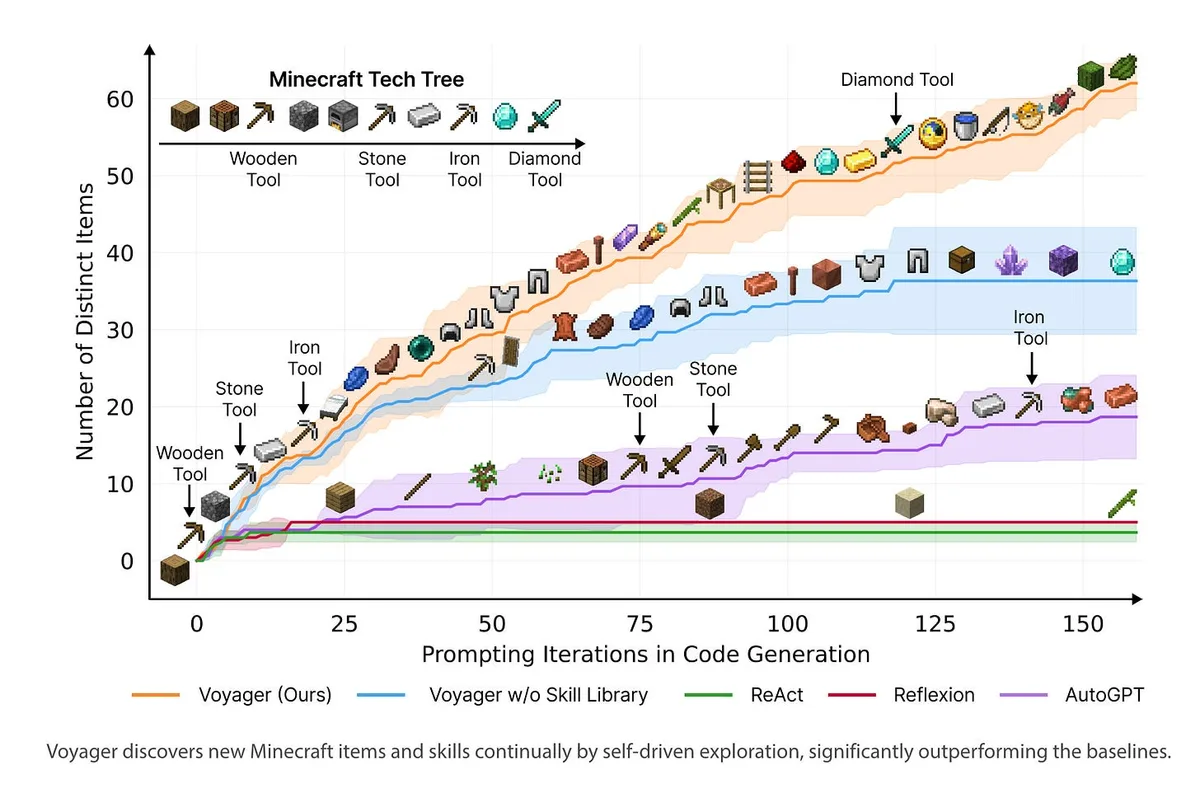
Published by Latent.Space; original chart creator not established in the supplied material.
He considered releasing the project earlier but held back because the agent made too little progress. A later model enabled enough meaningful movement through the game to justify a public release, although he still described its abilities as uneven and its progress as slow. By March 4, 2025, Latent Space’s interview identified him as the project’s creator. Hershey saw achievements such as beating a gym leader as useful milestones for observing extended work: the agent had to absorb new information, try again, and keep moving toward a goal.[2][1]
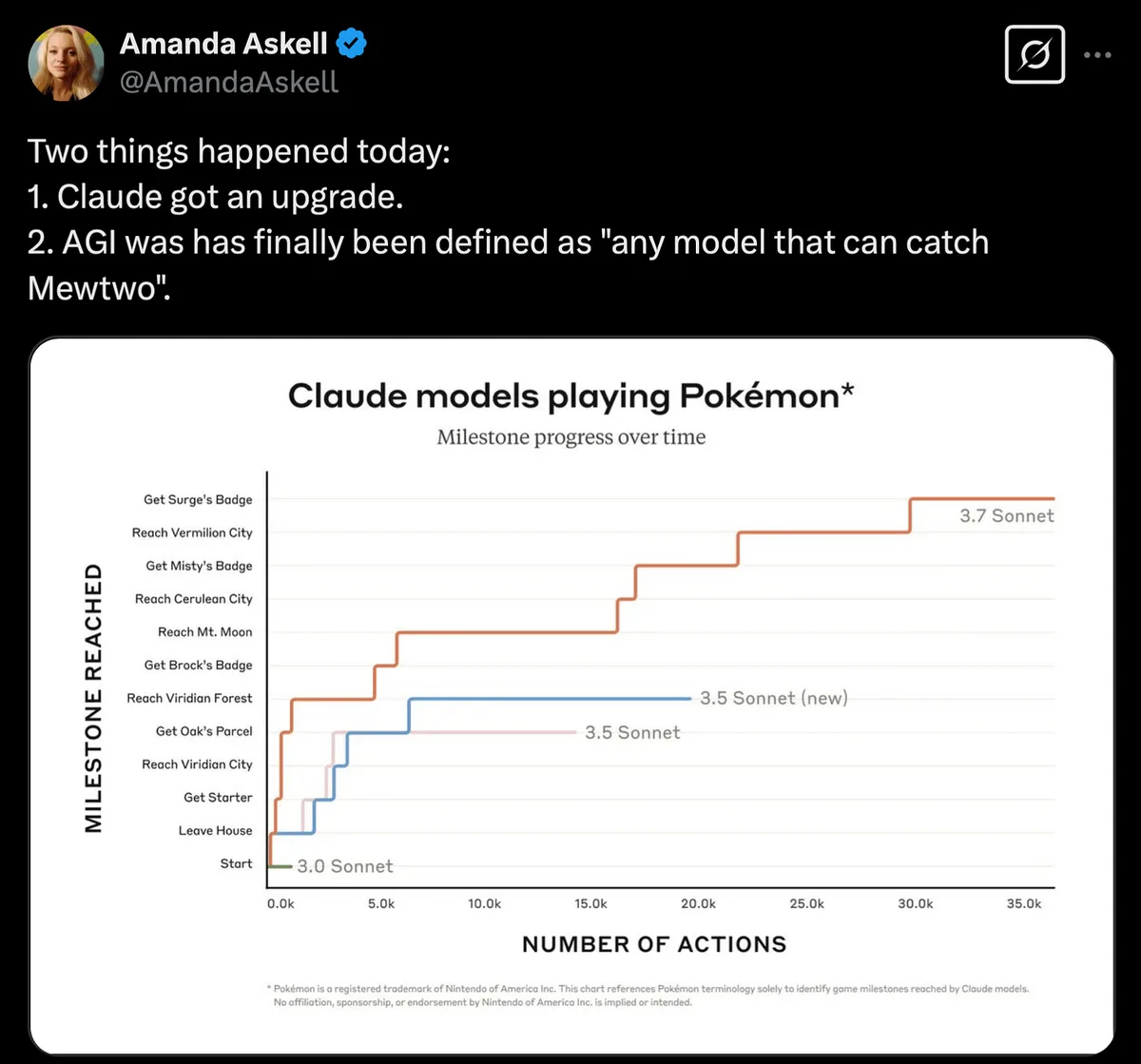
Latent Space; screenshot of a post attributed to Amanda Askell (@AmandaAskell).
The agent he described in his March 2025 interview had three principal tools: button controls, an editable knowledge base embedded in its prompt, and Navigator, which let it indicate a destination on the current screen. Navigator helped compensate for weaknesses in judging its position relative to where it wanted to go. After pressing a button, the agent received a screenshot and a small amount of information read directly from the game, including its location, before choosing its next action.[2]
To manage a history too large for the model’s context window, the system summarized the conversation after every 30 actions. The separate knowledge base let Claude retain longer-term information and add or edit sections itself—for example, it could record a useful relationship between Pokémon types. Hershey was unsure whether this was the optimal memory strategy; keeping everything in repeated summaries could make those summaries grow too large.[2]
His public ClaudePlaysPokemonStarter repository provides a minimal Pokémon Red implementation using the PyBoy emulator. Its loop captures a screenshot, reads game state from emulator memory, sends both to Claude, and executes the emulator commands Claude returns. This starter is a smaller implementation, rather than a complete specification of the streamed agent.[4]
Prompting, fine-tuning, and simpler agents
Hershey’s engineering approach included removing complexity as models improved. He said that testing newer models often meant deleting instructions written to prevent older models’ mistakes: “And then if I just delete all the band aids, it's just way better.” His MLOps Community interview connects this experience to a broader view of agent usefulness: small improvements in a necessary capability can make an entire workflow practical, while failures that require a user to reconstruct the agent’s work can consume the time it was supposed to save.[2]
Despite working with customers on fine-tuning, Hershey advised pushing prompting further before training a model for most use cases. His concern centered on developer time, difficult dataset construction, and the possibility that a subsequent model release would deliver the desired improvement more cheaply. He recognized useful exceptions: adapting to particular input or output formats, classification tasks, and improvements beyond off-the-shelf performance valuable enough to justify the effort. For that last category, he emphasized that finding effective data, methods, and tooling is a research undertaking.[2]
He also argued that language-model development retains important machine learning skills: building evaluation datasets, experimenting carefully, and tracking what changed. Managed model APIs could remove much of the burden of GPU serving and infrastructure, in his view, but wider access still required helping people understand what AI could do for them. A blank chatbot alone was not an adequate starting point for every user.[2]
Before his Anthropic agent work, Hershey worked on the infrastructure and production constraints of machine learning systems. That earlier experience provides context for his advice about the engineering effort surrounding a model.[3][5][2]
Earlier career: ML infrastructure and product design
Hershey began his career at Ford, where he started its ML infrastructure team. He subsequently did early presales work at Tecton and Determined AI, helping teams adopt their technologies, and invested in seed-stage AI companies at Unusual Ventures. His personal biography also lists a master’s degree in computer science from Stanford.[5][3]
In his November 22, 2022 essay, “Your MLOps process is probably broken — here’s how to fix it”, Hershey urged teams to design a product before optimizing a model. Business stakeholders, ML practitioners, and product engineers needed to agree on success, feasibility, and production constraints. He stressed examining data available in production, rather than only in a training warehouse: a home ZIP code might require a simple database query, while an average location over the previous five minutes could require difficult streaming aggregation. His recommendation was to start with simple data as well as simple models, and involve engineers early.[5]
Timeline
- release
Urges ML teams to design the product before optimizing the model
In his November 22, 2022 essay, “Your MLOps process is probably broken — here’s how to fix it”, Hershey urged teams to design a product before optimizing a model.[5] - project
Begins Pokémon agent experiments
Hershey recalled beginning his Pokémon agent experiments in June 2024 while working with Anthropic customers building agents.[2] - milestone
Discusses Claude Plays Pokémon as its creator
By March 4, 2025, Latent Space’s interview identified him as the project’s creator.[1]
From the Latent Space archive
Original posts and separately reviewed explanations.
Sources
- 1⚡️How Claude 3.7 Plays PokémonAccessed 2026-09-20
- 2Claude Plays Pokémon - A Conversation with the CreatorAccessed 2026-09-20
- 3David HersheyAccessed 2026-09-20
- 4davidhershey/ClaudePlaysPokemonStarterAccessed 2026-09-20
- 5Your MLOps process is probably broken — here’s how to fix itAccessed 2026-09-20
Model source and teaching reviews passed. Human editorial review pending. This profile describes the sources as of 2026-09-20.