

Browse · People
Alexander Embiricos
OpenAI’s Codex product lead in January and February 2026, whose work spans AI coding workflows and interfaces that make AI output easier to use, inspect, and correct.
Alexander Embiricos was identified as OpenAI’s Codex product lead in January and February 2026. His work includes demonstrating parallel coding workflows and developing interfaces for collaboration with AI. Before OpenAI, he worked on Remotion and Multi, where he described concrete decisions about automatic summaries, editable AI notes, and the limits of open-ended prompting.[6][2][5][3]
Codex: parallel work and completing the loop
In his January 12, 2026 appearance on Claire Vo’s How I AI, Embiricos demonstrated Codex workflows in VS Code and terminal environments. These included running multiple Codex instances in parallel with Git worktrees to avoid conflicts and creating detailed implementation plans for complex projects. The episode also covered automated code review and the distinction between prototyping and building production applications.[6]
At the 2026 AI Engineer World’s Fair, Embiricos and Romain Huet argued that using multiple agents through loops could improve productivity. Embiricos emphasized connecting agents to the reason for a task and to the steps that follow coding. As Latent Space reported, he said: “And then if you can connect it to what you do afterwards, review and deploy, that’s how you help it land much more work.”[1]
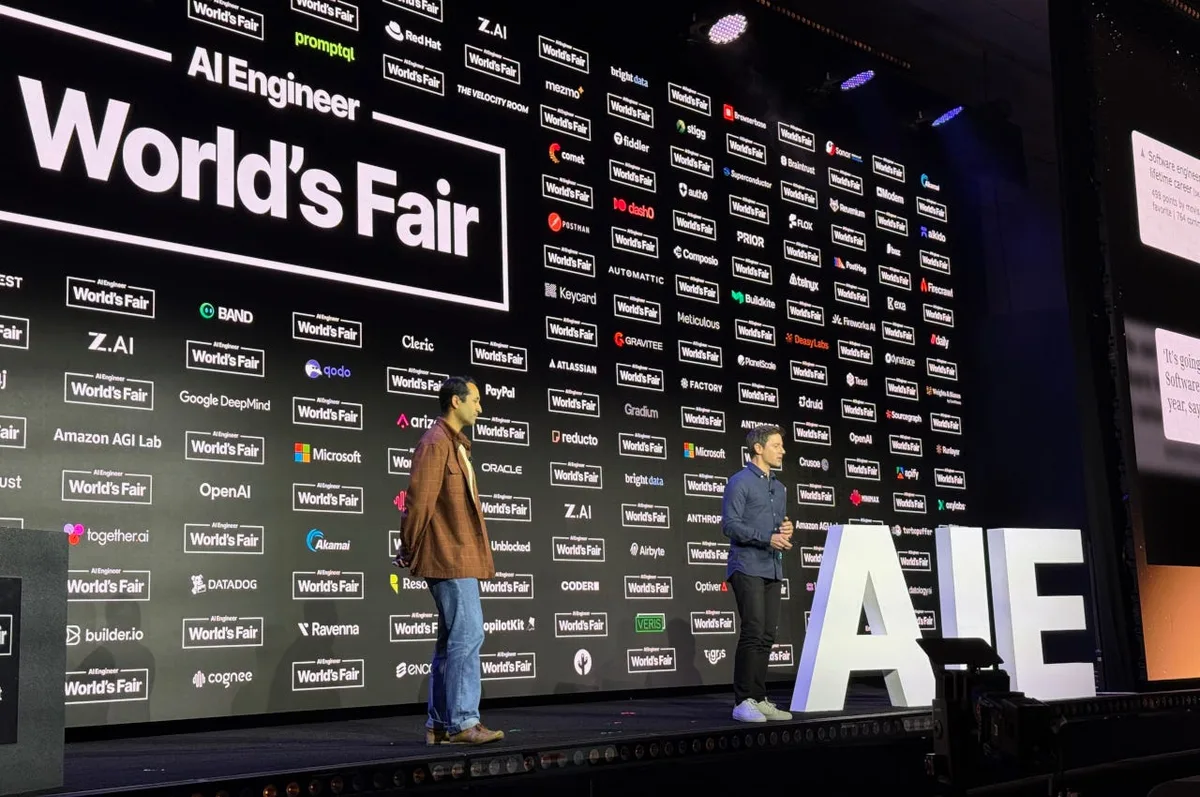
Latent Space; photographer not identified in the supplied source.
His public product views also address collaboration between engineering and design. In OpenAI’s February 26, 2026 Codex–Figma announcement, he described the intended benefit: “Engineers can iterate visually without leaving their flow, and designers can work closer to real implementation without becoming full-time coders.”[2]
Earlier work: Remotion and Multi, 2023–2024
Before his Codex work, Embiricos spent five years building a pair-programming product, according to Lenny Rachitsky’s December 2025 introduction. In July 2023, Embiricos announced Remotion’s rename to Multi, completing a refocus on helping technical teams build together. The starting workflows were pairing, code walkthroughs, and live code reviews: participants could point, draw, or edit in shared apps. The longer-term ambition was a multiplayer layer across native and web tools.[7][4]
Making AI summaries useful and correctable
In his March 2024 essay Designing Usefully Unintelligent AI Summaries, Embiricos took responsibility for Multi’s initial open-ended prompting feature: “It was my (terrible) idea.” He reported that few users tried prompting and fewer returned. Multi switched to automatic post-session summaries using a refined prompt. It later reintroduced open-ended inputs below the concise summary, with suggested topics that explained what users could ask for; Embiricos reported that these changes increased usage.[5]
Embiricos argued that summaries should be skimmable pointers to factual content. He illustrated the risk with an early-access user, Alice, whose GPT4-generated summary reversed a deployment-related meaning: work needed testing before deployment, but the summary described merging it to avoid blocking deployment. His proposed approach paired concise summaries with the actual artifacts discussed, screenshots, or relevant recording moments. Transcript and recording citations were among the interfaces Multi was exploring.[5]
Multi delivered AI output in the same real-time multiplayer notepad used for human notes. People could inspect, add, edit, and remove intermediate and final outputs through familiar collaborative controls. Embiricos explained the collective design choice: “Ultimately, we decided that the closer AI notes felt to teammate notes, the more natural it would feel to correct it—to work with it.”[5]
On June 24, 2024, Embiricos announced that Multi was joining OpenAI. He framed the team’s emerging question as working with computers: “Not on or using computers, but truly with computers. With AI.” The announcement also said Multi would be sunset, closed new team signups, and set July 24 as the service and data-deletion deadline for active teams, with extensions available.[3]
Timeline
- milestone
Refocused Remotion as Multi for technical collaboration
In July 2023, Embiricos announced Remotion’s rename to Multi, completing a refocus on helping technical teams build together.[4] - project
Explained Multi’s shift toward automatic, correctable AI summaries
In his March 2024 essay Designing Usefully Unintelligent AI Summaries, Embiricos took responsibility for Multi’s initial open-ended prompting feature: “It was my (terrible) idea.”[5] - milestone
Announced Multi’s move to OpenAI
On June 24, 2024, Embiricos announced that Multi was joining OpenAI.[3] - project
Demonstrated parallel Codex coding workflows
In his January 12, 2026 appearance on Claire Vo’s How I AI, Embiricos demonstrated Codex workflows in VS Code and terminal environments.[6] - milestone
Outlined Codex–Figma collaboration between engineers and designers
In OpenAI’s February 26, 2026 Codex–Figma announcement, he described the intended benefit: “Engineers can iterate visually without leaving their flow, and designers can work closer to real implementation without becoming full-time coders.”[2]
Sources
- 1AIEWF Daily Dispatch: Loops, Software Factories & Forward Deployed EngineersAccessed 2026-09-20
- 2OpenAI Codex and Figma launch seamless code-to-design experienceAccessed 2026-09-20
- 3Multi is joining OpenAIAccessed 2026-09-20
- 4Renaming Remotion to MultiAccessed 2026-09-20
- 5Designing Usefully Unintelligent AI SummariesAccessed 2026-09-20
- 6
- 7
Model source and teaching reviews passed. Human editorial review pending. This profile describes the sources as of 2026-09-20.